
Strategy / Organisational Development
2027 Starts Today: The Capabilities Your Company Will Need Next Year
Why good annual planning does not begin with measures, but with the question of what a company must be able to do
By Hasan H. Hasic · September 28, 2026 · 9 min read

Towards the end of the year, many companies produce plans, budgets and target pictures. Revenue should grow, new markets should open, processes should become more efficient and customers should be served better.
Those goals matter. But between a goal and its delivery sits a question that surprisingly often stays unanswered: what does our company actually have to be able to do for this?
A growth target is not yet a capability. A new system, an additional position or a bigger marketing budget is, at first, only a measure. Planning turns into a workable development agenda only once it is clear which repeatable performance is supposed to emerge from it.
Why conventional annual planning jumps to measures too early
In practice, a goal is usually followed immediately by a list of projects. More revenue means a campaign. Better efficiency means budgeting software. Stronger leadership means booking a seminar. Each measure can make sense, yet its link to the capability actually needed often remains implicit.
This leads to a familiar year-end: projects were delivered, budgets were spent, and still the hoped-for change has not settled into the company. The reason is not always poor execution. Sometimes it was never described precisely which new ability was supposed to be built.
From goals to capabilities: an example
Suppose a technical SME wants to grow more strongly with international customers in 2027. The obvious measures would be an English website, trade fair visits and additional sales activity. But sustainable international growth demands more: recognising qualified enquiries across several channels, pricing offers for different markets, serving customers reliably at a distance, understanding regulatory requirements and planning internal capacity in time.
The strategic capability is not "having an English website". It is the ability to translate international demand systematically into profitable, deliverable orders.

Six capability fields SMEs should review for 2027
- 1.
Understanding and developing customers deliberately
Can the company see which customer groups are profitable, why customers buy, where demand is lost and which relationships depend too heavily on individuals? Good customer knowledge should not sit only in the heads of experienced people. It should be visible in decisions, workflows and available information.
- 2.
Scaling processes reliably
Can a higher order volume be handled without coordination, errors and follow-up questions growing disproportionately? Scalability does not mean maximum standardisation. It means organising the normal case clearly and handling exceptions deliberately.
- 3.
Deciding with data
Does leadership receive, in time, the few pieces of information needed for good decisions? Or do reports only appear after manual searching and reconciliation? Data capability shows not in the number of dashboards but in whether relevant signals are available, understood and actionable.
- 4.
Using technology responsibly
Can the company apply digital tools and automation where a clear benefit exists, while safeguarding quality, data protection, security and human responsibility? This capability is organisational and technical at the same time.
- 5.
Distributing knowledge and responsibility
If decisions and customer knowledge stay with a few key people, any growth becomes fragile. A durable company creates room for decisions, develops leadership and makes critical knowledge available where it is needed.
- 6.
Bringing change into daily work
Many companies can start projects. Fewer can anchor new ways of working so that they are still used and improved six months later. The ability to change comes from clear responsibility, feedback, learning and consistent leadership.
The weight of these fields is reinforced by the way work is changing. The World Economic Forum Future of Jobs Report 2025 expects that, by 2030, an average of 39 percent of today’s core skills will have changed or become outdated. That figure is not a forecast for any single SME. It does show why annual planning should look at capabilities, not only at money and projects.
Describing the capability gap properly
"We need to become more digital" is too vague. "We need to qualify customer enquiries from three channels within one working day and assign them clearly" describes a performance for which process, roles, data and technology can be examined.
By the end of 2027 we can reliably deliver [a relevant performance] for [a defined group or situation] with [a quality or time criterion], without [today’s dependency] remaining in place.
Four decisions for a workable development agenda
- Which three to five capabilities are indispensable for the most important goals?
- How well do we master these capabilities today, and what do we base that on?
- Which gap limits several goals at once and therefore carries leverage?
- What do we build internally, what do we solve with partners, and what do we deliberately postpone?
The last question matters most. Not every capability has to be built fully in-house. Strategic leadership, customer understanding and responsibility for the operating model should stay internal. Specialised execution can sensibly be complemented, provided knowledge transfer, steering and quality requirements are clarified.
Budget follows the capability, not the other way round
Once a capability is clearly described, investments can be combined better. Perhaps sales needs not only a new system but also a common qualification model, cleaned data and clarified responsibility. Perhaps automation first needs process work. Perhaps a local partnership is worth more for international expansion than additional reach.
That changes the budget discussion. Instead of letting individual wishes compete, it becomes visible which combination of people, processes, information and technology produces a strategically necessary capability.
A 90-minute workshop for the leadership team
- 20 minutes: make the three most important goals for 2027 concrete.
- 25 minutes: formulate the capabilities each goal requires.
- 20 minutes: assess today’s maturity using observable examples.
- 15 minutes: select the two capability gaps with the greatest leverage.
- 10 minutes: name one responsible person and the next verifiable step.
The workshop does not replace strategy work. It does prevent annual planning from ending in a disconnected project list.
The wis.dom|bridge™ perspective
Company development becomes more durable when it looks at the business as a whole. Customers, processes, leadership, technology, growth and risk influence each other. That is why a broad assessment at the start is often worth more than the premature selection of a single service area.
The most sensible next step
The multilingual wis.dom Growth Assessment gives owners and leaders a structured first view of the whole picture of their company.
The results show which capabilities already carry weight and which gaps will limit the coming year most.
Start the Growth AssessmentFrequently asked questions
What is the difference between a capability and a resource?
A resource is, for example, a person, a budget or a system. A capability is the reliable performance that emerges from several resources, clear workflows and responsibility.
How many strategic capabilities should an SME develop at once?
Few. Two or three prioritised gaps with high leverage are usually easier to steer than a broad transformation programme without sufficient leadership capacity.
How can progress be measured?
Through observable performance: time, quality, errors, customer outcome, decision speed or reduced dependency on individuals. The measurement should fit the capability.
Sources and editorial references
- World Economic Forum, The Future of Jobs Report 2025
- KfW Research, SME Innovation Report 2024
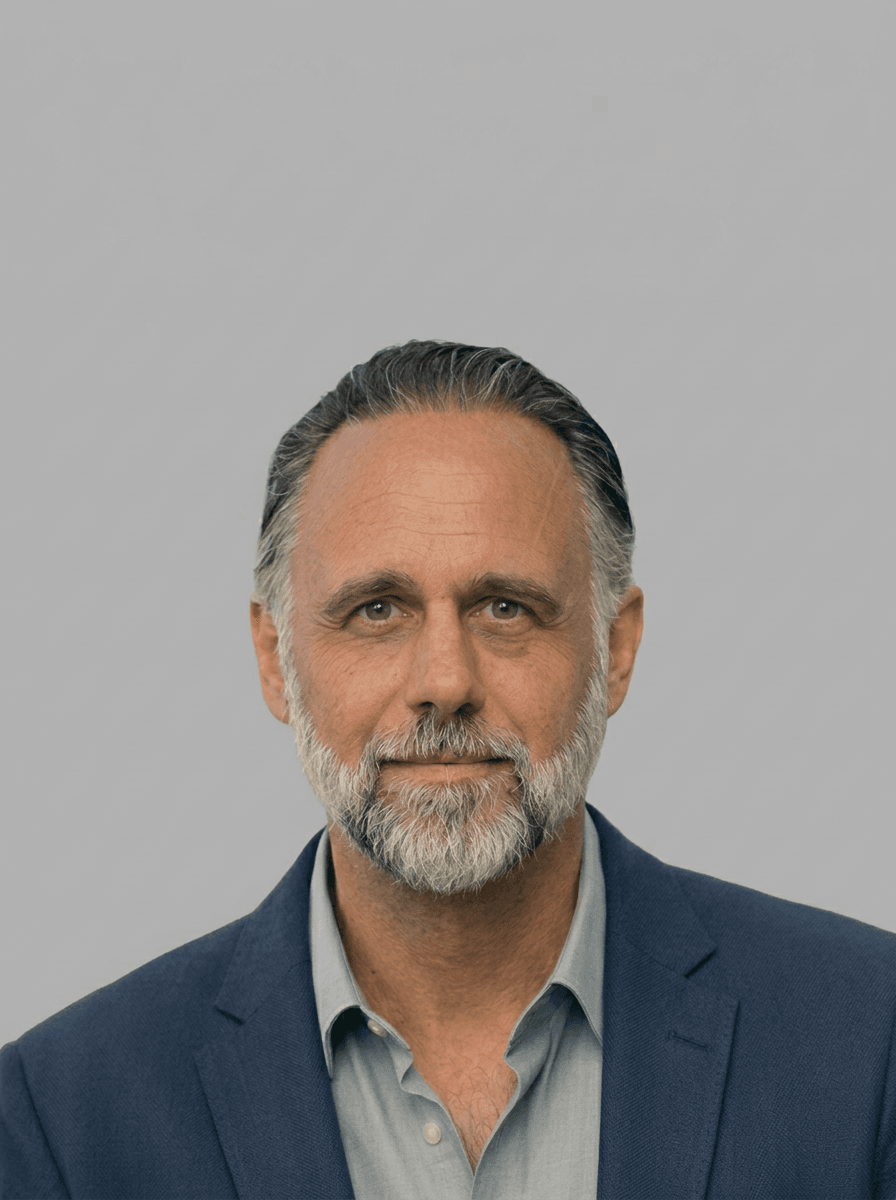
Hasan H. Hasic
Hasan H. Hasic is an entrepreneur, advisor and Key Person of Influence at wis.dom|bridge™. He helps owner-led companies translate strategic goals into workable structures and concrete development steps.