
Business Development / Digitalisation
When One Person Becomes the Operating System of the Company
Why SMEs should build structure before growth forces them to
By Hasan H. Hasic · August 17, 2026 · 7 min read

A company can be successful and still stand on a fragile foundation.
The order book is healthy. Customers are satisfied. The team is busy. From the outside there is little reason to question the business model at all.
And yet, in the background, a surprising amount depends on one single person.
That person knows the key customers, decides on exceptions, checks quotations, resolves internal conflicts and knows why certain things are done the way they are done. In owner-led SMEs this is often the owner. Sometimes it is a long-serving key employee who has become the unofficial memory of the company.
As long as that person is available, the system looks efficient. Questions get answered quickly. Problems get solved pragmatically. Decisions do not need long routes.
But efficiency and dependency can look very similar from the outside.
The difference usually shows up only when the central person is unavailable, wants to hand over more responsibility, or the company is supposed to grow.
When personal strength turns into structural dependency
Most companies are not designed on a drawing board. They develop step by step.
In the beginning this is an advantage. Short routes, personal relationships and fast decisions make small companies agile. Processes appear where they are needed. For many things a conversation across the desk or a short phone call is enough.
Over time, however, it is not only the company that grows. So does the knowledge that sits with individual people.
The owner remembers the special agreement with a customer. She knows which price can be defended on a particular job. A long-serving employee knows the actual sequence of a workflow, even though it was never written down anywhere.
That is valuable experience. It only becomes a problem when this knowledge is never translated into structures that can carry weight.
Then the central person gradually becomes the real operating system of the company.
Information converges on that person. Decisions wait for their approval. Exceptions can only be judged by them. The more responsibility they take on, the more indispensable they become. And the more indispensable they become, the harder it gets to hand anything over.
This is rarely a deliberate decision. Usually it is the result of many small, pragmatic solutions that made perfect sense in the moment.

The invisible cost of improvisation
Improvisation is part of entrepreneurship. No sensible process can cover every conceivable exception, and SMEs in particular need the ability to react fast and flexibly.
But improvisation should stay the exception. Once it becomes the daily working principle, it creates costs that never appear as a separate line on any invoice.
A piece of information has to be searched for. An approval has to be waited for. A task has to be explained a second time. Two people unknowingly work on the same topic. A customer enquiry sits untouched because it is not clear who owns it.
Each single instance may cost only a few minutes. Added up, it becomes a considerable loss of time and attention.
Another consequence weighs even heavier: people get used to asking upwards whenever they are unsure.
That is understandable. If it is not clear which decisions someone is allowed to make, checking back becomes the most reasonable option. What later looks like a lack of ownership is therefore not always a problem with the employees. Sometimes the conditions that would make ownership safely possible simply do not exist.
As a result, management spends more and more time on operational questions. Not because they want to pull every decision to themselves, but because the existing system keeps sending decisions back to them.
Growth amplifies what is already there
When capacity gets tight, the obvious answer often seems to be hiring more people.
More capacity can of course be necessary. But it does not solve a structural problem.
If responsibilities were unclear before, a larger team does not make them clearer. If information sat with individuals before, every new person creates additional questions. If decisions could only be made by management before, the queue in front of that desk simply gets longer.
Growth amplifies what is already there.
Good workflows become more powerful. Unclear workflows become more complicated.
The same is true for technology. A new CRM, an automation or an AI tool can significantly improve a well-understood workflow. If the workflow is unclear, the new system often just digitalises the existing confusion.
Then there are more tools, more data and possibly more notifications. But not necessarily better decisions.
So the decisive question before a growth step is not only: how many additional people or which new software do we need?
At least as important is this one: can the way we work today actually carry more customers, more orders and more people?
Solid structure does not mean corporate bureaucracy
When people hear the word structure, many think of thick process manuals, rigid approvals and unnecessary bureaucracy. For an SME that would often be just as damaging as complete ambiguity.
The goal is not to regulate every action. The goal is to organise recurring work clearly enough that the available energy is not constantly consumed by the same questions.
In my view, that mainly requires clarity in five areas:
- 1.
Customers and enquiries
How does an enquiry enter the company? Who takes it on? Where is the current status recorded? And how does it become visible when something is left sitting?
- 2.
Responsibility
Who is accountable for an outcome? Which decisions can employees make themselves? When is a consultation needed, and with whom?
- 3.
Knowledge
Where does relevant information live? Does it only exist in emails, personal notes and people’s heads, or is it reliably accessible to the right people?
- 4.
Recurring workflows
Which activities regularly follow the same pattern? Where do handovers, waiting times or avoidable errors occur?
- 5.
Steering the business
Which few key figures does management actually need? When are they available? And do they lead to decisions, or are they only collected?
These questions look simple. Answering them honestly is often harder than selecting a piece of software.
Because technology eventually forces a company to make decisions about workflows and responsibility. It is better to make those decisions deliberately beforehand.
The digital foundation comes after the clarity
For me, digitalisation therefore does not start with technology.
It starts with clarity.
Only when a company understands how information flows, where decisions are made and which workflows really need support can a digital solution be selected and built sensibly.
A good digital foundation connects the visible outside presence with the internal workflows. It makes sure enquiries do not get lost, relevant information is available in a reliable place, recurring tasks are properly supported and management gets a realistic overview of the business.
This is not about introducing as many systems as possible. Quite the opposite.
The best solution is often the one that is barely noticeable day to day, because it fits the people and the way the company actually works.
Technology is a tool here. Not the goal.

Letting go without losing control
Many owners want to hand over responsibility. At the same time they have experienced that delegated tasks do not always come back in the expected quality.
The understandable reaction is to step back in more strongly.
But delegation is not only about handing over a task. Responsibility can only really be taken on when expectations, decision-making space and the required information are clear.
Without that basis, no delegation happens. What happens is a temporary relocation of uncertainty.
Letting go therefore requires structure.
That does not mean management withdraws from the company or gives up control. It means organising control differently: less through personal presence and individual approvals, more through clarity, transparency and reliable information.
A well-structured company is not one where the owner is no longer needed.
It is one where that person is needed where their experience and judgement create the greatest value.
Structure should be built before urgency arrives
Most companies only begin fundamental changes when the pressure is already high.
A key employee drops out. Growth stalls. Customer enquiries are missed. Management is permanently overloaded. Or a succession suddenly makes visible how much knowledge never left the owner’s head.
Then structure has to be created under time pressure.
My most important conclusion from many years in companies of different sizes is therefore a simple one:
Good structures are not only an answer to growth. They are a precondition for growth to happen in a healthy way.
They do not have to be perfect. They do not all have to be created at once.
But the right time to start is before the company urgently needs them.
How wis.dom|digital™ supports this
We built wis.dom|digital™ out of exactly this thought.
Our team helps SMEs create a professional digital foundation for their growth and develop it further over time. That includes not only technical infrastructure and digital visibility, but also, depending on the stage, customer workflows, automation, relevant key figures and ongoing entrepreneurial support.
Not every company needs a full transformation project right away. Often the most sensible first step is to create clarity together about where the biggest dependencies sit today and which structure would make the biggest difference next.
If you would like to look at our approach in your own time, you will find more here:
Explore wis.dom|digital™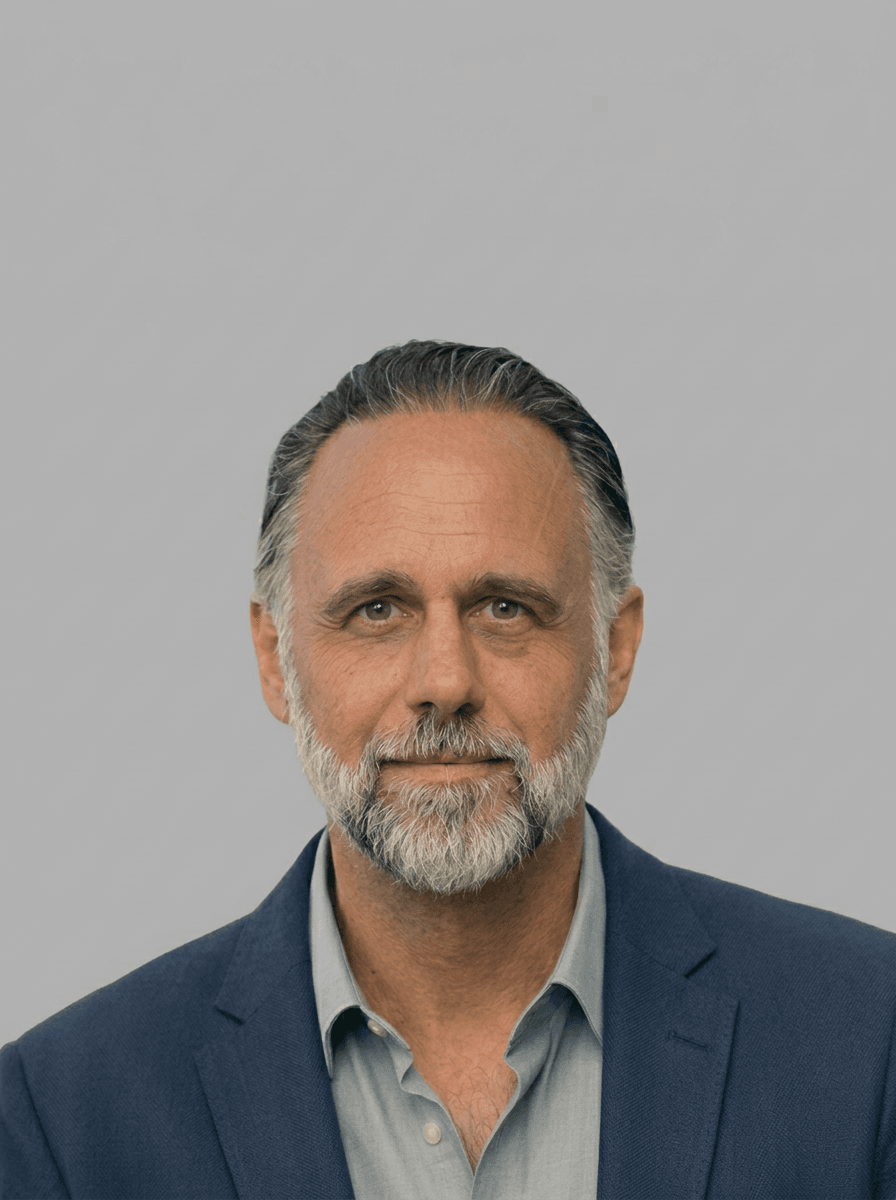
Hasan H. Hasic
Hasan H. Hasic is an entrepreneur, advisor and Key Person of Influence at wis.dom|bridge™. He combines many years of experience in Swiss corporate and advisory environments with the build-up of international, specialised teams. Delivery across the wis.dom service areas is carried out by the respective experts and team leads.