
Understanding CBAM Certificates and How to Hedge the Cost: wis.dom|bridge™ Partners with Aither
Sarajevo, 12 May 2026
wis.dom|bridge™ today announces a strategic partnership with Aither, the Swiss-headquartered environmental commodities and carbon markets specialist trusted by more than 6,000 clients globally. The partnership is built to address what is fast becoming the single largest blind spot in EU industrial trade: the financial exposure created by CBAM certificates.
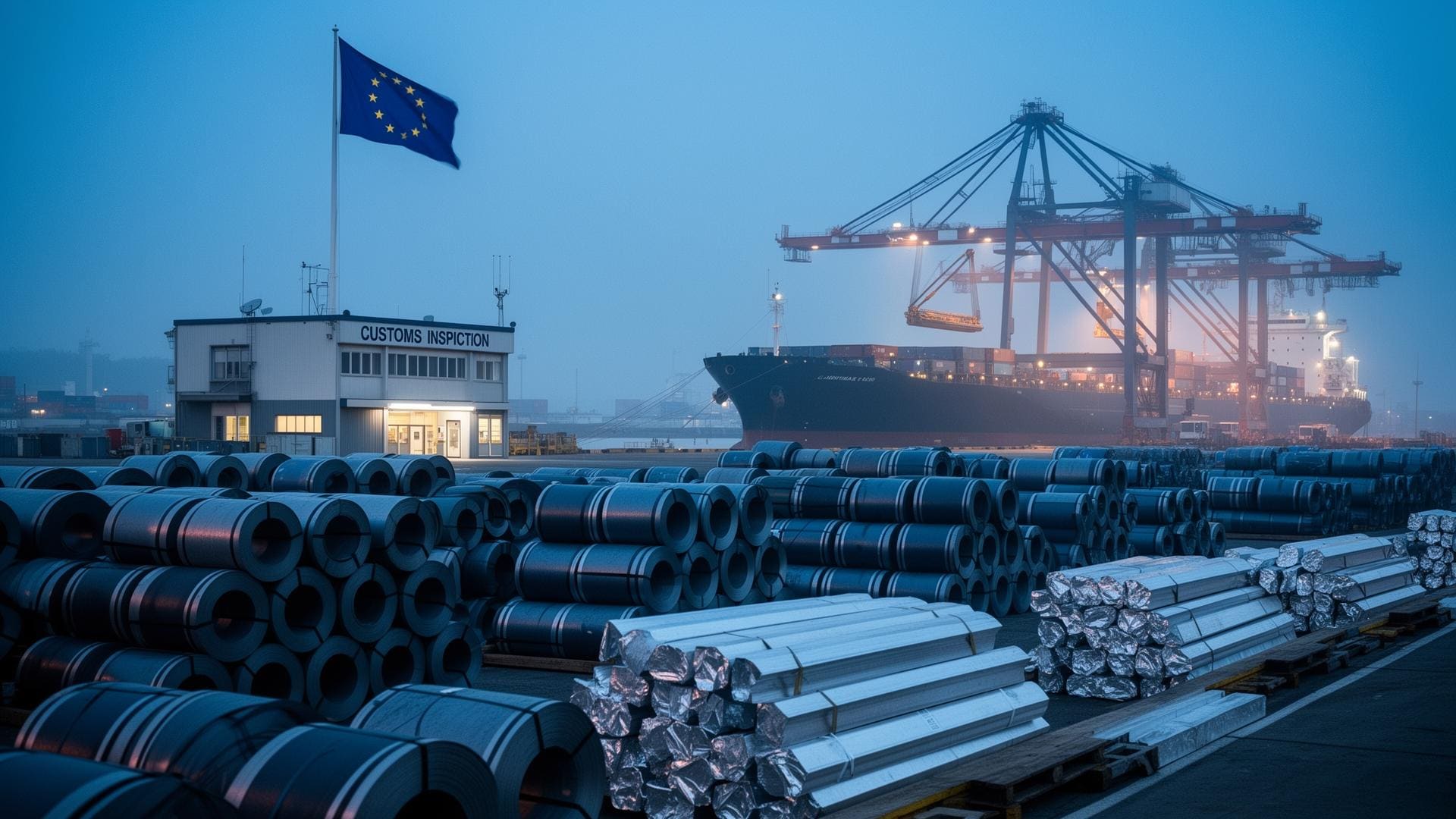
As of 1 January 2026, the Carbon Border Adjustment Mechanism has moved out of its transitional reporting period and into its definitive phase. Importers of iron and steel, aluminium, cement, fertilisers, hydrogen and electricity into the EU are no longer simply reporting embedded emissions, they are paying for them. The first annual declaration and surrender of CBAM certificates is due by 30 September 2027, covering 2026 imports, and free ETS allowances for EU producers will continue to phase down to zero by 2034. The cost line is now real, recurring and growing.
The partnership combines two complementary capabilities that, until now, most importers have had to assemble themselves from disconnected providers.
wis.dom|bridge™ leads the upstream side of the equation: regulatory interpretation, supplier-side emissions readiness, MRV alignment, verification preparation, CBAM declarant onboarding, and the structuring of compliance-ready data flows between non-EU producers and EU importers. This is the work that determines how many CBAM certificates an importer will actually be required to surrender.
Aither leads the downstream financial side. Through its Aither CBC (CBAM Benchmark Certificate), a daily-priced digital instrument that mirrors the EU ETS price, Aither gives importers a way to settle CBAM liability at a known, market-referenced cost rather than waiting passively for the official quarterly CBAM certificate price to be set by the European Commission. Combined with Aither's hedging desk and 15+ years of carbon-market execution experience, this allows importers to forward-plan their CBAM cost the same way they already forward-plan currency, energy and freight exposure.
Together, the two firms close the loop that most CBAM-exposed importers are still missing.
The three questions every CBAM-exposed importer now has to answer
The partnership is built around three operational questions that determine an importer's full CBAM cost exposure. How many tonnes of embedded CO2 are actually inside the goods we import, calculated under the EU method and verified to a standard EU customs and auditors will accept? What carbon price will those tonnes be charged at, factoring in the official CBAM certificate price, the phase-out of free ETS allowances, and the deduction of any carbon price already paid in the country of production? And how do we lock in or reduce that cost before it lands on the P&L, rather than absorbing the full spot price at surrender?
wis.dom|bridge™ owns questions one and two on the supplier and regulatory side. Aither owns question three on the financial markets side. Most consultancies stop at question one. Most trading houses start at question three. The gap in the middle is where importers are currently losing money.
What the partnership delivers in practice
EU importers and the producers supplying them gain access to a single coordinated workflow: verified, EU-method embedded emissions data per supplier and per CN code, prepared for inclusion in the annual CBAM declaration; documented deduction of carbon prices already paid at origin, supported by the evidence EU authorities require; pre-verification readiness so that emissions data submitted by suppliers withstands third-party audit; CBAM cost modelling at company, product and supplier level, including the phase-out trajectory of free allowances through 2034; access to Aither CBC pricing and Aither's hedging strategies to manage CBAM certificate cost over the declaration cycle; and live market intelligence on EU ETS, CBAM certificate pricing, and regulatory developments affecting compliance cost.
Who this is for
The partnership is designed for three groups. First, EU importers in CBAM-covered sectors who need both verified emissions data from their non-EU suppliers and a working hedging strategy for their certificate cost. Second, non-EU producers exporting into the EU who want their data to be importer-ready and audit-ready, so they remain competitive against European producers as free allowances disappear. Third, banks, trade finance providers and treasury functions that need to price CBAM exposure into credit decisions, supply contracts and working capital planning.
A pan-EU footprint
The partnership operates across the EU. wis.dom|bridge™ contributes its established presence across the DACH region and the Western Balkans, both critical corridors for CBAM-exposed trade flows into the EU. Aither contributes its Swiss-based trading and advisory infrastructure, its established compliance-market client base across Europe, and direct access to ETS and CBAM market liquidity.
Both firms are committed to treating CBAM not as a reporting exercise, but as what it actually is from 2026 onward: a recurring financial cost that has to be measured, reduced where possible, and hedged where not. The first joint engagements are expected to commence in Q3 2026, with priority given to importers facing material exposure in the 2026 declaration cycle.
Get a costed CBAM position
Use our CBAM cost calculator, explore the certificate strategy resources, or book a 1:1 review with the joint wis.dom|bridge™ × Aither team.
Media contact: info@wisdombridge.biz · wisdombridge.biz