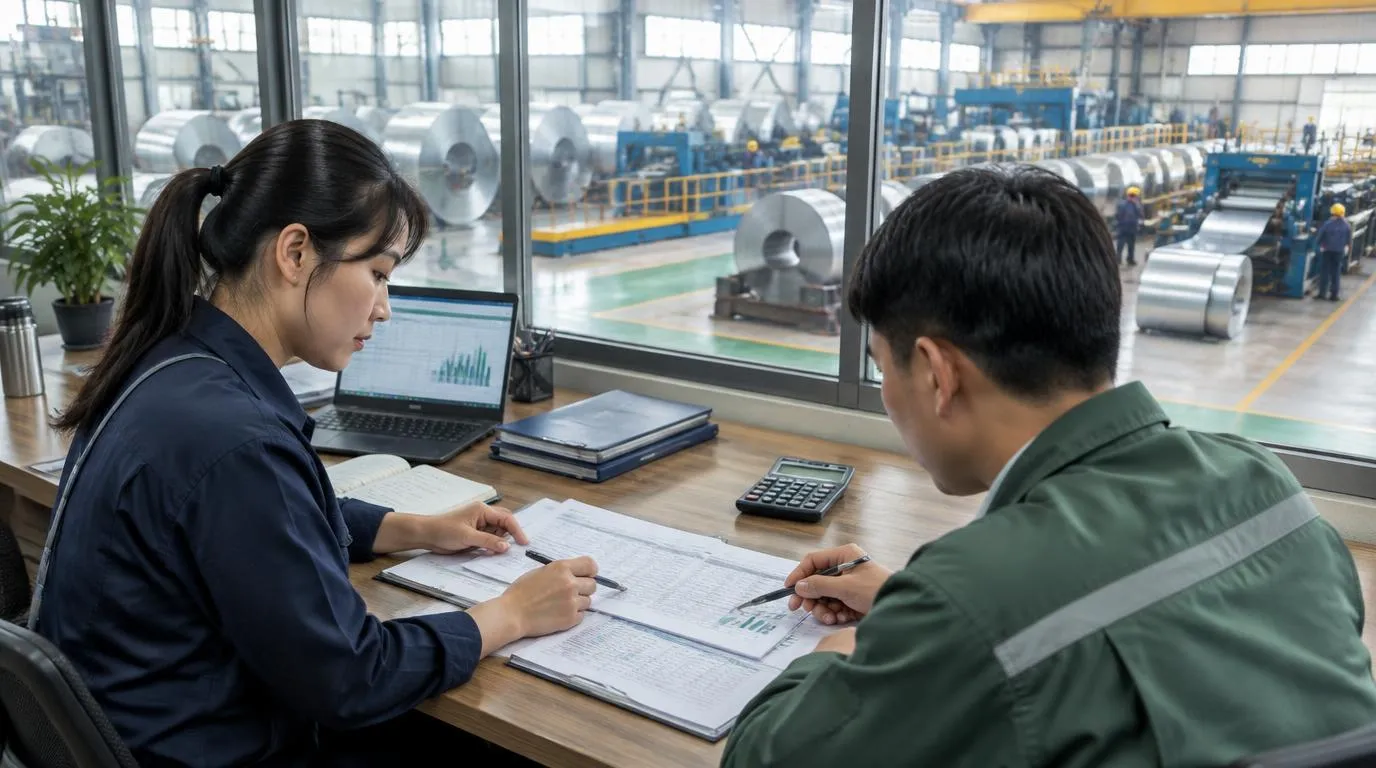
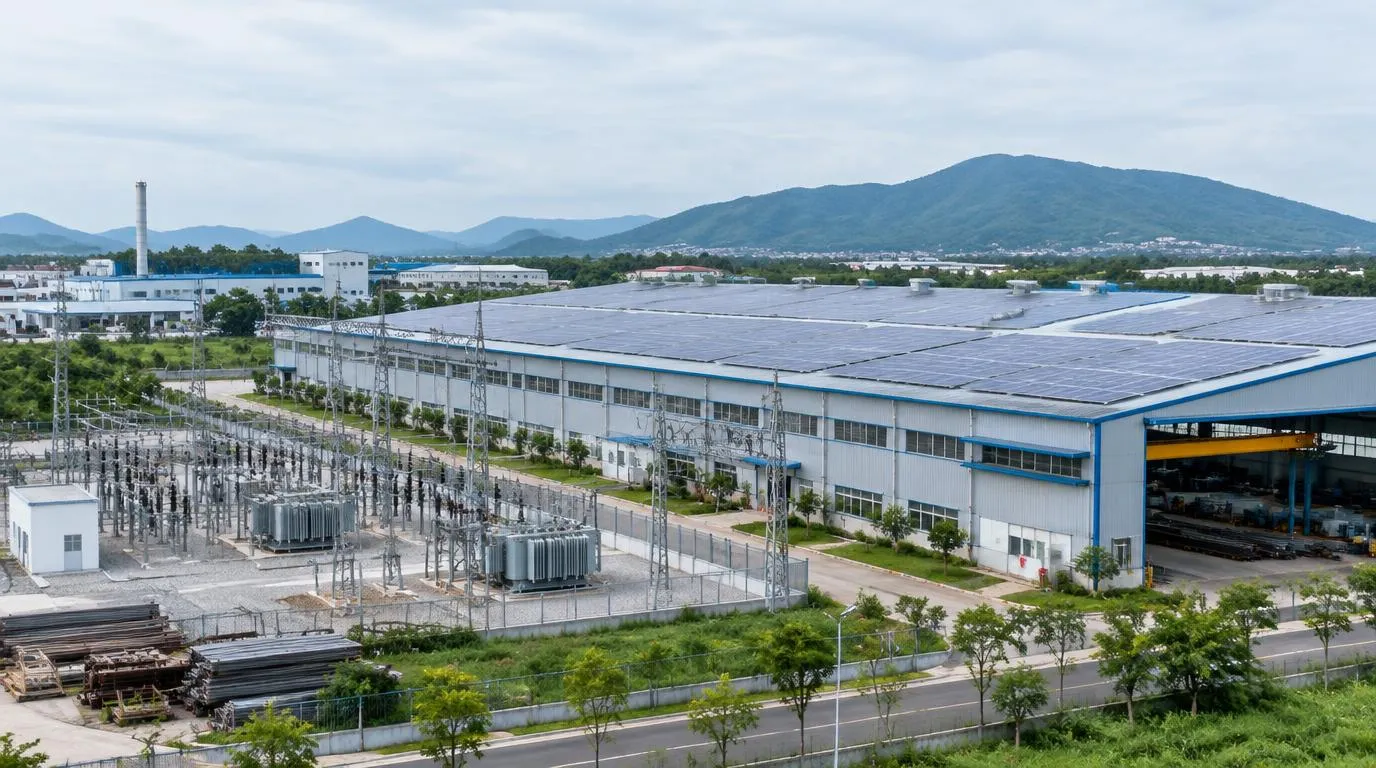
A renewable-power supplier offers your factory a long-term contract. The proposal promises cleaner electricity, a stronger customer story and lower exposure to carbon costs. All three may be relevant. They are not the same benefit, and only some may enter the current CBAM calculation. Before signing, ask which cost the contract actually changes.
Alberto shared RECCESSARY’s April 22 report on a webinar about decarbonization in Vietnam and Thailand. It makes a useful connection between export competitiveness, emissions evidence and direct power purchase agreements, or DPPAs. Our reading adds an important boundary: a reduction in electricity-related emissions is not automatically a reduction in CBAM certificates for steel or aluminum.
Start with the emissions the rule actually counts
Scope 1 usually describes a company’s direct emissions. Scope 2 describes emissions from purchased energy. CBAM uses its own embedded-emissions rules, including product and production boundaries. A corporate footprint reduction cannot simply be copied into the importer’s declaration.
For the relevant steel and aluminum goods, Annex II of the CBAM Regulation limits the definitive calculation to direct emissions. The Commission’s sector guidance confirms that electricity-related indirect emissions are not included for these goods. Buying cleaner electricity can reduce the factory’s Scope 2 footprint without, by itself, lowering its current CBAM certificate requirement.
That does not mean electricity is irrelevant. A genuine production change that reduces covered direct emissions can affect CBAM, even if electricity enables that change. But that is a physical, documented process improvement, not a benefit created merely by signing a renewable-power contract. Other CBAM sectors have different treatment and must be assessed separately.
Buy green power for the benefits you can demonstrate, not for a CBAM saving that the current rule does not count.
The €616,000 shipment figure needs its original context
RECCESSARY reports an analyst’s 2030 hot-rolled-coil comparison between Vietnamese and Thai producers relying on country defaults. It cites roughly €336 versus €274 per tonne and a difference of up to €616,000 on 10,000 tonnes. Those are a reported future scenario and rounded headline values, not a measured 2026 saving from verified actual emissions.
The figure is also not evidence that a DPPA would remove that difference. The original discussion concerns default-value assumptions and country comparisons. Before using it in a business case, reproduce the product code, production route, markups, benchmark adjustment and price assumptions. Do not present it as a guaranteed return from renewable power.
There can still be a strong business case for cleaner power
- 1.
A more defensible energy-cost plan
Compare the full delivered cost against existing supply, not just the headline generator price. Include settlement terms, network charges, balancing, contract duration and downside scenarios. A renewable contract can carry new price risks as well as remove old ones.
- 2.
Evidence your customers actually request
Some customers assess electricity-related product footprints and supplier climate performance separately from CBAM. Confirm the accounting method and evidence they accept. Electricity claims need traceability and controls against double counting, not only a certificate attached to a sales presentation.
- 3.
A platform for physical production improvements
Cleaner electricity may support process electrification or a broader change in production. Evaluate the technical feasibility, direct-emissions effect, reliability and investment cost of that change separately from the power contract itself.
A signed DPPA is the beginning of delivery risk, not the end
RECCESSARY’s webinar participants highlighted curtailment, volatile contract-for-difference settlements and overlapping tariff charges as obstacles in Vietnam. These are source-reported execution risks, not a legal assessment of every available contract. They are nevertheless the right questions for a manufacturer to take into negotiations.
- Which DPPA structure is available to this installation, and is the buyer eligible under current Vietnamese rules?
- What happens when the generator cannot deliver or grid constraints reduce output?
- Who bears settlement, imbalance and network costs, and how could those costs change?
- Who owns the environmental attributes, and what evidence supports the customer’s intended claim?
- Does the production schedule match the energy supply profile, and what covers the remaining demand?
- Which expected benefits survive if the assumed CBAM saving is removed entirely?
Run the power decision and the CBAM evidence work in parallel
The power team should evaluate cost, reliability, legal structure and environmental claims with local energy specialists. The CBAM team should map goods, production routes, direct emissions and relevant precursor records, then agree usable data and verification arrangements with EU buyers. The teams should exchange evidence without pretending one contract solves both problems.
A factory with a sound power contract and weak emissions records still has a CBAM data problem. A factory with excellent CBAM records can still have an expensive energy contract. Competitive manufacturers know which issue they are fixing and how the result will be measured.
Separate your energy opportunity from your CBAM exposure
The CBAM Readiness Assessment is a starting point for product and evidence gaps. The automated results overview is free; a full report and expert review are separate paid services. DPPA contracting requires local energy and legal expertise, and emissions verification remains independent.
Start the CBAM Readiness AssessmentSources and editorial references
- RECCESSARY, Wendy Lo, “RECCESSARY webinar: CBAM enforcement and green power gaps put Thailand, Vietnam manufacturers on the clock”, April 22, 2026, reporting on the April 21 webinar. https://www.reccessary.com/en/news/thailand-vietnam-decarbonization-recc
- European Commission, “Guidance document 5E: Sector-specific guidance document on aluminium”, August 14, 2026. https://taxation-customs.ec.europa.eu/document/download/590e983b-c937-41ea-bb9f-810c29e70e1e_en
- European Commission, “Guidance document 5D: Sector-specific guidance document on iron and steel”, August 14, 2026. https://taxation-customs.ec.europa.eu/document/download/3eb64513-8255-4c71-875a-bd0a8c7ff772_en
- Regulation (EU) 2023/956, May 10, 2023, Article 7 and Annex II, as amended. https://eur-lex.europa.eu/eli/reg/2023/956/oj
This article is our own analysis of sources shared by Alberto. Third-party rights remain with their owners. Source-reported projections are not promised savings. Current Vietnamese contract eligibility and EU product rules must be checked for the specific installation and transaction.

Dr. Elvis Mujagić
Dr. Elvis Mujagić is Partner and Head of CBAM at wis.dom|bridge™. He helps manufacturers and importers connect emissions evidence, sourcing decisions and carbon-cost exposure.