
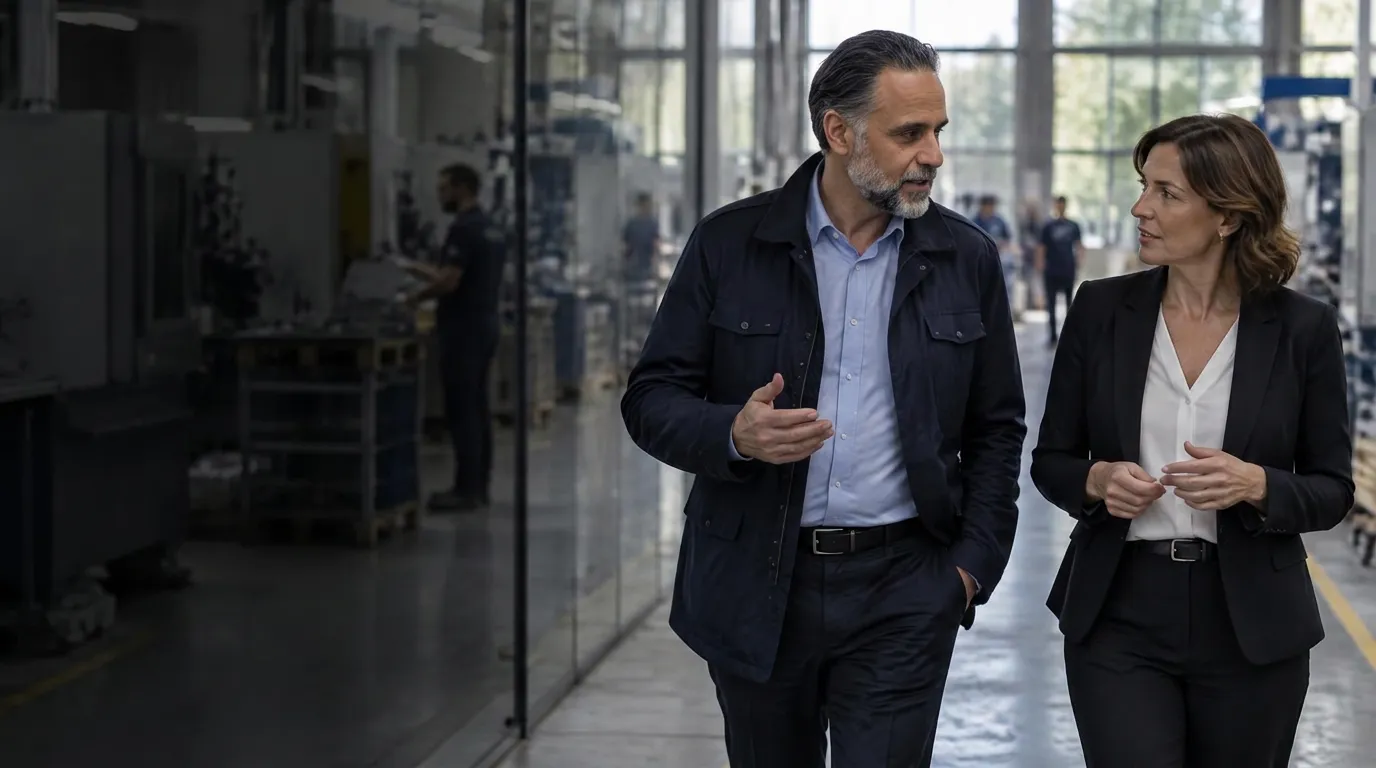




Business Transition Readiness
Make your business ready for the time after you.
Successful companies can still depend heavily on their owners. We build the structures that keep responsibility, knowledge and value in the business.
Both routes are a good start: the Business Readiness Assessment for a structured starting point, the confidential first conversation if you would rather talk directly.
When a senior advisor can help
Some decisions do not need another management layer. They need an experienced perspective.
Your team knows the business. But questions about owner dependence, leadership and the owner's future role often need an independent perspective.
Not to take decisions away, but to make better decisions possible.
The starting point is rarely a finished succession plan. It is usually one of these four situations:
Strategic orientation
Several options are on the table, but priorities, consequences or the right next step are not yet clear.
Entrepreneurial decisions
An important decision should be thought through with someone who has no internal agenda and can also ask uncomfortable questions.
Dependence on the owner
Decisions, relationships or knowledge still converge on one person, limiting the company's room to act.
Leadership and succession
Responsibility needs to move, but roles, decision rights or the next leadership level are not ready to carry it.
How an engagement begins
Start with orientation. Then decide how much support is actually justified.
The first two steps are free and without obligation.
- 01
Business Readiness Assessment
A structured view of how well your company can operate, adapt and create value without your constant involvement. Free, around 15 to 25 minutes.
This is an orientation tool, not a company valuation, due diligence exercise or formal succession assessment.
- 02
Confidential results review, 60 minutes, free
We go through the findings together, check whether they reflect the reality inside the company, discuss your future role and work out which next step is actually worth taking.
- 03
Implementation, if it is justified
Where structured support makes sense, we continue through a clearly defined mandate. Content, scope and framework are agreed in advance.
Business Transition Readiness
How you will notice that something has changed
- Daily business runs even when you are unreachable for a week.
- Important customers, suppliers and banks know more than just you.
- Decisions are taken where the responsibility sits.
- The numbers show the situation without you having to explain them.
- Succession, withdrawal or a sale are options, not emergency measures.
A strong company gives its owner options.

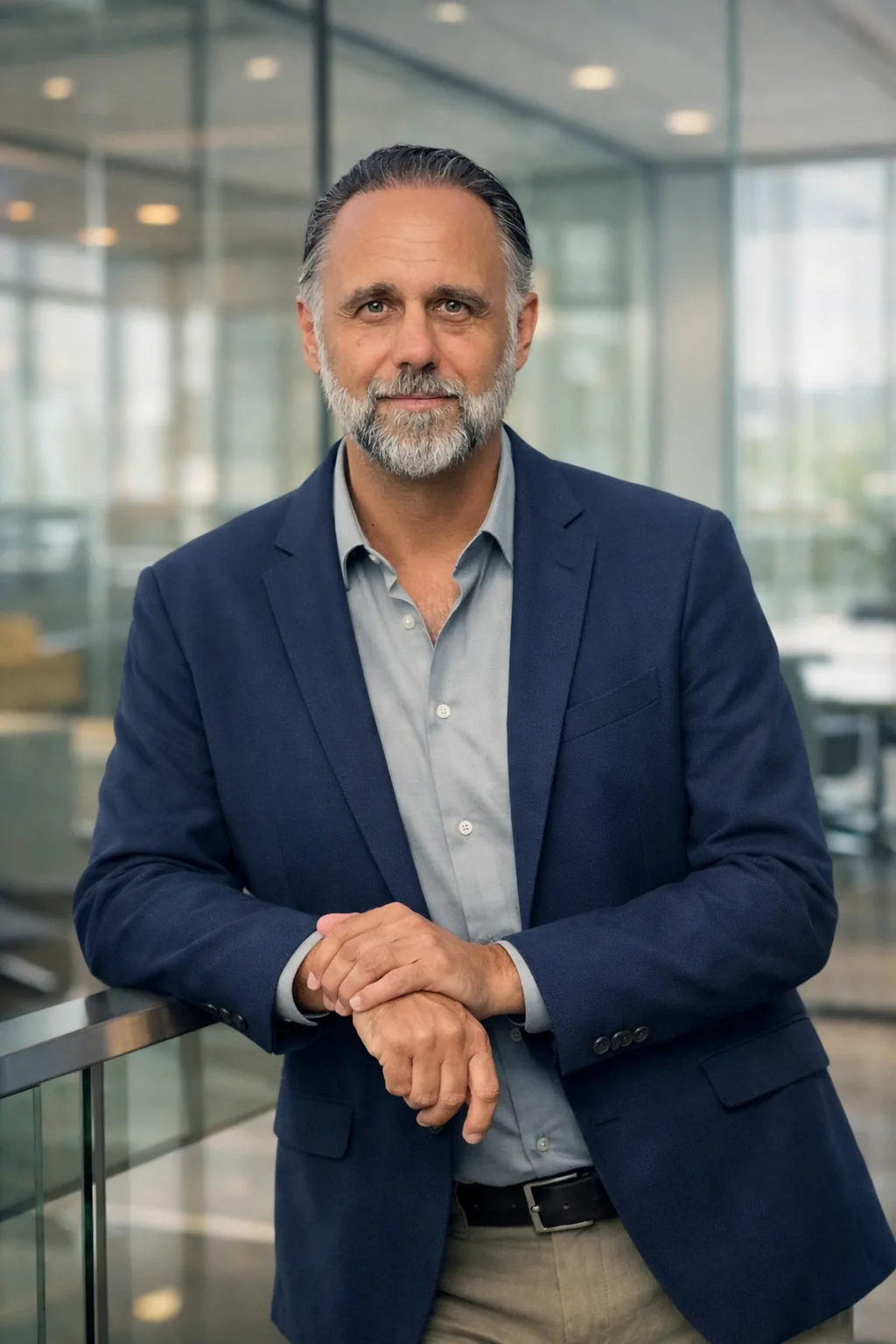
More than 25 years of entrepreneurial experience
Hasan H. Hasic is Founding Partner of wis.dom|bridge™ and brings together more than 25 years of experience in management consulting, entrepreneurship, executive roles, business development and supervisory board work.
Today he is, among other roles, Deputy Chairman of the Supervisory Board of BH Telecom, contributing at board level to a comprehensive strategic transformation.
25+ years of experience | Switzerland & Southeast Europe | entrepreneur | management consultant | supervisory board
Swiss & Bosnian citizen | Swiss German, German, English, Bosnian/Croatian/Serbian
Client Perspective
What changes
when someone
pushes back.
01 / 06
“He challenged assumptions we had stopped questioning. That honest outside view changed how we approach product and strategy, and the numbers followed.”
Nedim Rifatbegovic
Co-founder, On-demand services platform
What a senior advisory mandate can look like
Every mandate follows the actual situation of the company. The way of working, however, follows a simple logic.
- 01.
Getting to know each other
In a confidential first conversation we clarify the starting point, the main questions and whether working together makes sense at all.
- 02.
Defining the mandate
Together we define the role, the topics, the expected time frame, the interfaces and the form of collaboration.
- 03.
Ongoing involvement
Hasan works continuously with the relevant decision-makers, predominantly remote and complemented by selected on-site sessions where they clearly add value.
- 04.
Reviewing regularly
Priorities and scope are adjusted continuously to how the company actually develops.
Typical framework
The typical framework is usually 1 to 2 days of involvement per month, depending on the mandate, predominantly remote, with selected on-site sessions where they add clear value. The collaboration runs directly with owners, CEOs or management teams, on the basis of a monthly retainer.
All mandates are individually adapted to the concrete situation. The days indicated describe the agreed framework of involvement and can include conversations, preparation, analysis, participation in selected meetings and work on concrete questions.
Starts with an initial term of 6 months. Thereafter extended by 3 months at a time, cancellable with 30 days' notice before the start of the next period. Collaboration is predominantly remote. On-site appointments and travel expenses are agreed individually.
Where specific specialist expertise is required, wis.dom|bridge™ can selectively involve suitable specialists from its own network. The advisory role stays clearly separate from specialist mandates.
Latest Insights
Thoughts and practical perspectives on business development, change, regulation, digital opportunities, leadership, and long-term future viability.

The Owner Who Cannot Step Away
Many valuable owner-led companies depend too heavily on the person who built them. Why succession planning and sale readiness should begin before exhaustion creates urgency.
 Hasan Hasić
When One Person Becomes the Operating System of the Company
Many SMEs depend on single individuals far more than they realise. How clear structure enables healthy growth and real delegation.
Hasan Hasić
The SME Succession Crisis: How Diaspora Expertise Can Save Generational Businesses
Addressing the critical challenge facing aging SME founders in the Balkans and how diaspora professionals can provide sustainable succession solutions.
 Alen Avdić
Frequently asked questions
No. Many owners begin before deciding between family succession, management succession, ownership with external management or a sale. The purpose is to strengthen the company and create credible options.
Ideally three to ten years before you expect a substantial change in your role. Leadership and organisation do not change in a few months.
No. We do not sell your company and we do not push you in that direction. If a sale becomes relevant later, a well-structured company is the best possible starting position.
No. This is not personal development work. It is about structures, responsibilities, leadership capacity and transparency inside the company, worked through with you and your management team together.
The assessment and the results review are free. Further support is scoped against the actual situation and defined clearly in advance. We do not work with standard packages here.
First visible changes usually appear within the first months, for example in decision paths and reporting. Leadership depth and successor readiness take considerably longer.
Not every challenge requires another executive. Sometimes the right perspective is enough.
If you are facing an important strategic or entrepreneurial decision, we can use a confidential first conversation to see whether an ongoing Senior Advisory mandate would be useful.
Confidential and without obligation.