
Business Perspective
Navigating the Next Economic Revolution
From a knowledge economy to a wisdom economy, and what that shift asks of established businesses

We find ourselves deeply embedded in a knowledge economy, where information is abundant, accessible, and constantly evolving. Yet, while knowledge is at our fingertips, we often lack the wisdom to apply it effectively. It's time to shift from an era driven solely by knowledge to one rooted in wisdom, a wisdom economy that values not just what we know but how we use it to create meaningful impact.
Knowledge without context
Countless startups, SMEs, and corporations strive to gather as much knowledge as possible, immersing themselves in learning through endless courses, workshops, and online resources. However, there is a growing gap between accumulating knowledge and applying it with wisdom. Knowledge without application or context risks becoming an end in itself rather than a means to drive purposeful change.
Knowledge and technological possibilities will become increasingly available. What will matter is who can meaningfully contextualize both and apply them responsibly.
From an era of answers to an era of questions
To truly innovate, we need to shift from an 'era of answers' to an 'era of questions.' As AI and automation advance, the ability to ask insightful, meaningful questions becomes more critical than simply knowing the answers.
We understand this development as the transition from a pure knowledge economy to a wisdom economy.
The advantage is not knowing everything. It is recognizing what is relevant, making the right decision and carrying it through.
What progress means in a wisdom economy
In a wisdom economy, progress is not about using every new possibility immediately. It is about recognizing what is genuinely meaningful for a company, its people, and its goals. Technology, expertise, and experience are not considered in isolation, but placed in a business context.
Future viability arises from the interplay of knowledge, experience, technology, and human judgment. It grows where good questions are allowed, different perspectives are connected, and decisions are not judged only by their short-term effect.
What this means for companies
For companies, this means neither reflexively adopting new possibilities nor rejecting them in principle. It is about recognizing relevant developments early, understanding their actual significance, and deriving decisions that fit the company and its further development.
This is where our work begins. We help companies structure complexity, set clear priorities, and turn insights into concrete, sustainable development.
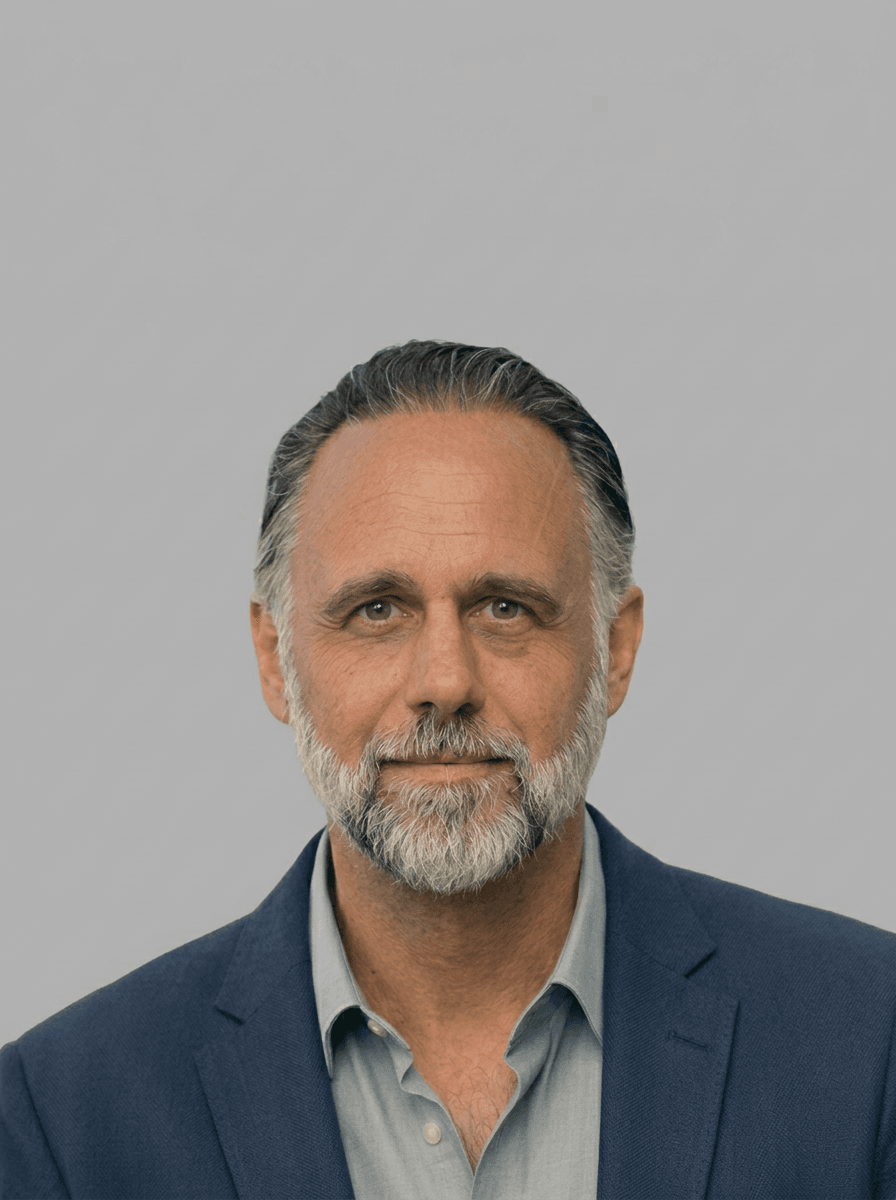
Hasan H. Hasić
Hasan H. Hasić is the Founding Partner of wis.dom|bridge™. He works with owners and management teams on decisions where business structure, change and long-term continuity meet.
The advantage is not knowing everything. It is recognizing what is relevant, making the right decision and carrying it through.
Business Readiness Assessment