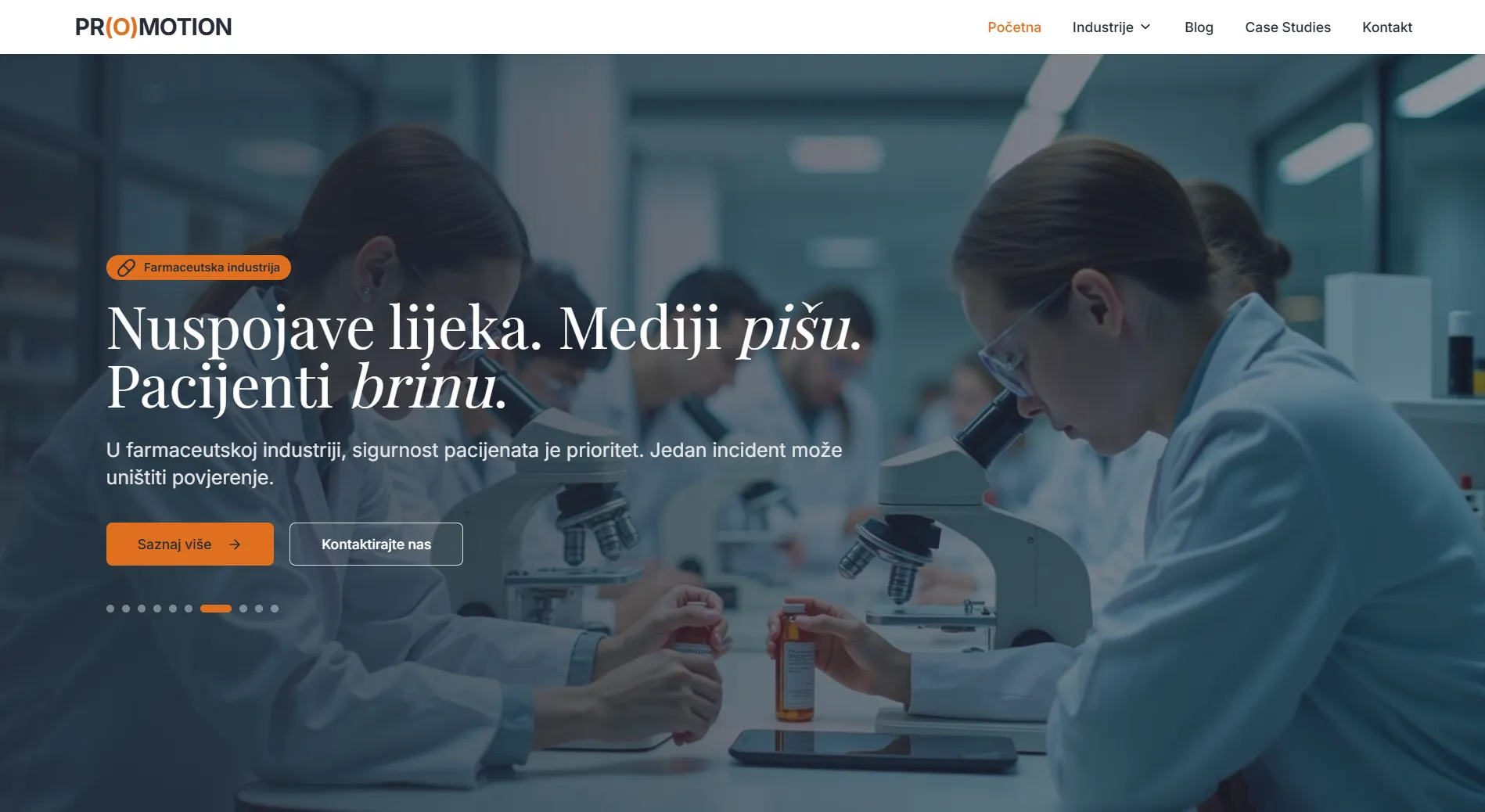
PR and crisis communication is hard to sell. As long as nothing happens, it feels unnecessary. Once something happens, it is often too late to start looking for help. A typical agency website lists services such as media relations, strategy and crisis communication, and the visitor moves on. The agency behind this example brings more than 25 years of experience on both sides, in newsrooms and in companies. That experience was not visible enough online.
We built the website around situations, not services. Ten industry pages, from IT and construction to pharma, healthcare and public institutions, each open with a concrete scenario: a negative post by a former employee, an accident on a construction site, side effects of a drug in the headlines. Industry articles and case studies show how such situations are handled. A short three-step questionnaire asks about industry, company size and current communication challenges, and leads to a free, personalized analysis. Meetings can be booked directly, and cookies for third-party tools load only with consent.
The next step lies behind the website. Questionnaire answers could flow into a shared overview, with a prepared draft of the analysis, a responsible person and a follow-up date, so no enquiry waits in an inbox. Monitoring of media and online mentions for existing clients could raise early warnings, and a clear crisis channel could route urgent requests straight to the right person, day or night. Which of these steps make sense would need to be checked with the agency and its team.
Imagine a company completing the questionnaire on a Sunday evening. On Monday morning the agency already has a prepared analysis draft, matched to the industry and the challenges selected, ready for a personal call.